It is a common misconception that large, powerful dogs like the Cane Corso are just naturally “stinky.” While every dog has a specific scent, a powerful odor usually indicates an underlying issue. Because of their skin folds, activity levels, and specific health predispositions, Corsos require a bit more “maintenance” than your average breed.
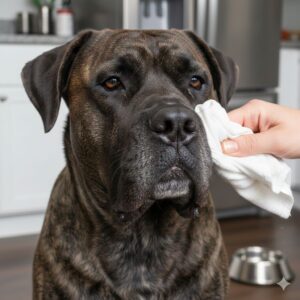
Here is a guide to help you identify the source of the smell and how to fix it.
1. The “Frito” Feet: Paws and Yeast
If your Corso smells like corn chips, the culprit is likely yeast or bacteria growing between their paw pads. This breed often deals with environmental allergies, which causes them to lick their feet, creating a moist environment where fungi thrive.
How to fix it:
- Keep paws dry: Dry their feet thoroughly after walks in the rain or dew.
- Antifungal wipes: Use Chlorhexidine wipes between the toes 2–3 times a week.
2. Hidden Odors: Skin Folds and Drool
Cane Corsos have heavy jowls and some degree of skin wrinkling around the face. Saliva and food particles get trapped in these folds (lip fold pyoderma), leading to a sour or rot-like smell.
How to fix it:
- The Post-Meal Wipe: Use a damp cloth to clean their “chops” after every meal.
- Dry the folds: Moisture is the enemy; ensure the skin inside the folds stays dry to prevent bacterial overgrowth.
3. The “Silent” Smells: Ears and Glands
If the smell is metallic or “fishy,” it isn’t coming from the fur—it’s likely coming from the anal glands or an ear infection. Because Corsos can have floppy or cropped ears, debris can easily get trapped in the canal, leading to a dark, smelly discharge.
How to fix it:
- Ear Cleaners: Use a vet-approved drying ear cleaner once a week.
- Fiber: If it’s a “fishy” smell from the rear, adding plain canned pumpkin to their diet can help firm up stools and naturally express anal glands.
FAQ: Keeping Your Corso Fresh
Q: How often should I bathe my Cane Corso?
A: Ideally, every 4–6 weeks. Bathing them too often can strip their coat of natural oils, leading to dry skin, which actually produces more odor-causing oil.
Q: Can their diet cause the smell?
A: Absolutely. Low-quality fillers in dog food can lead to excessive gas and oily skin. Switching to a high-quality, grain-inclusive or limited-ingredient diet often reduces “doggy breath” and body odor.
Q: Why does his coat feel greasy?
A: This is often Seborrhea. It occurs when the skin produces too much sebum. It’s usually a secondary symptom of allergies or hormonal imbalances and should be checked by a vet.